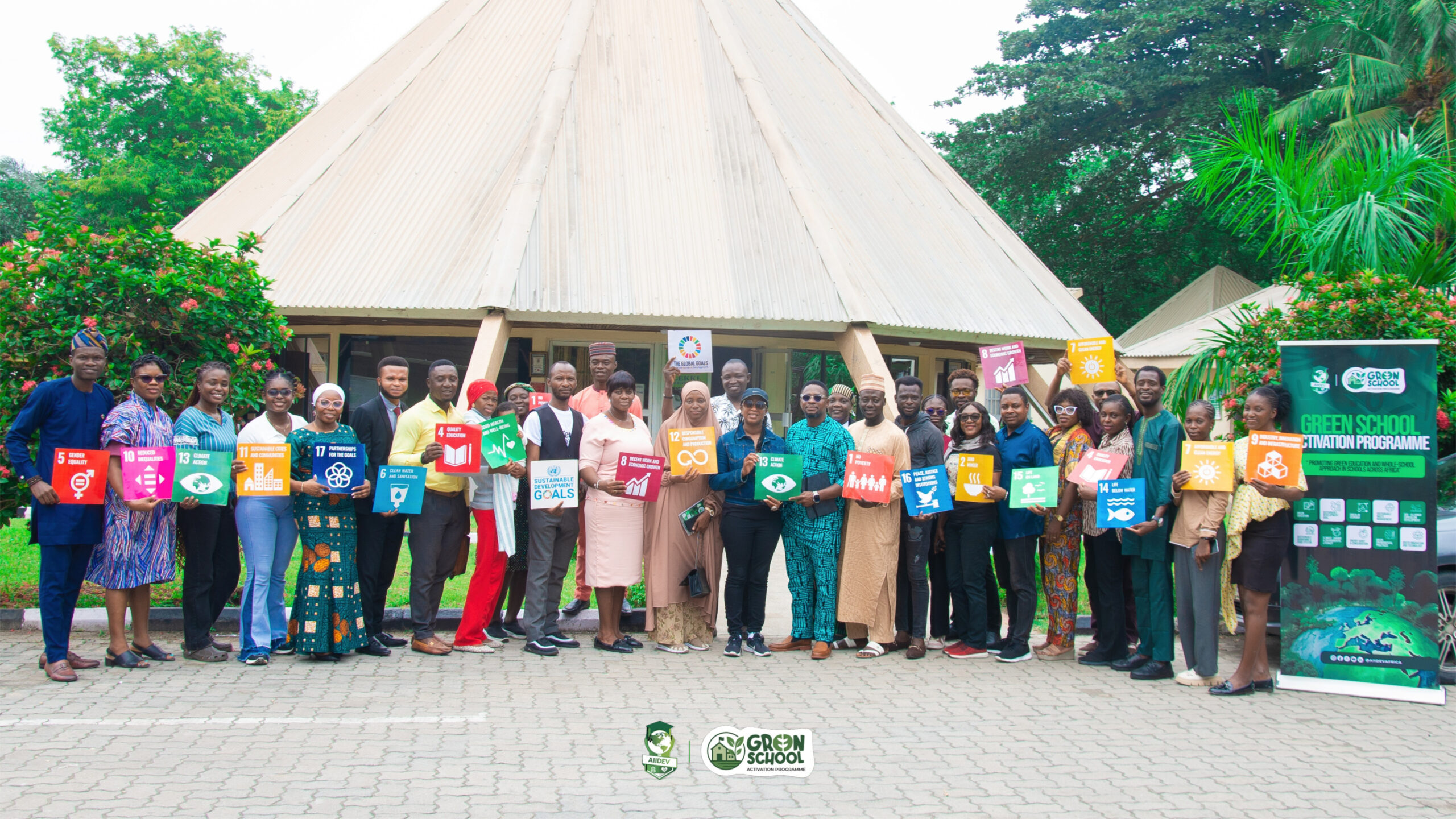
…A Bold Push to Make Nigerian Schools Hubs of Sustainability
Across Nigeria, a quiet revolution is taking root in classrooms. Chalkboards are giving way to green boards, and schoolyards are transforming into gardens and recycling hubs. Leading this charge is the Advance Initiative for Innovation and Development (AIIDEV), whose Green School Activation Programme is challenging the nation’s education system to embrace sustainability as the future of learning.
Piloted in Abuja, Lagos, and Oyo State, the programme has already reached 100 schools and over 300 teachers, equipping educators not just to teach, but to lead a new generation of climate-conscious citizens. The initiative brings to life a whole-school approach where lesson plans, school operations, community partnerships, and even playgrounds align with sustainable practices.
At the heart of this effort is the Green School Summit, a groundbreaking series of state-level gatherings designed to galvanize action and chart a bold course for green education.
At the inaugural summit in NAENI Innovation Hub Abuja on 1 August 2025, Engr. Rahman O. Mogaj, National Focal Point for the Greening Education Partnership, declared teachers as the “frontline soldiers” of sustainable transformation. He unveiled the National Network of Accredited Green Schools, a certification platform that rewards eco-committed schools with access to global resources, training, and recognition.
Participants explored low-cost but high-impact solutions from composting leftover food to vertical farming in small spaces, and from solar adoption to community recycling partnerships.
Rita Idehai, founder of Ecobarter, showcased how schools can link with local businesses to turn waste into wealth. The event closed with a charge for teachers to transform classrooms into incubators of environmental leadership.
At the University of Ibadan’s Centre for Sustainable Development (CESDEV), the Oyo summit on 7 August 2025 deepened the conversation. Professor Adejoke Akinyele, Dean of the Faculty of Renewable Natural Resources, delivered a keynote titled “Promoting Green Education and the Whole-School Approach in Nigeria.” With urgency, she warned: “Nigeria is facing grave environmental challenges, deforestation, pollution, and the worsening effects of climate change. Education is our most powerful tool to raise citizens who are conscious, resilient, and ready to act.”
Her message was clear: reforming the curriculum is not optional, it is survival. She championed the Whole-School Approach, which blends classroom reform with eco-friendly infrastructure, community engagement, and a sustainability-first school culture.
Regional Lead of AIIDEV, Emmanuel Ola-Olowoyo, reinforced this, promising resources, seeds, and teacher training to embed sustainability projects in schools. “We are planting more than trees,” he said. “We are planting a movement that will outlive us.”
Other speakers including Jumoke Olowokere (Waste Museum), Mayokun Iyaomolere (Plogging Nigeria), and Elijah Adejimi (For Nature and Future Ecogreen Initiative) urged schools to adopt clean energy, create eco-clubs, and introduce competitions to reward innovation.
The final summit, at the Lekki Conservation Centre on 8 August 2025, focused on Nigeria’s commercial capital, a city facing some of the harshest environmental threats.
Professor Timothy Nubi, Founding Director of the Center for Housing and Sustainable Development at the University of Lagos, declared green education a “catalyst for sustainable development and environmental stewardship.”
Speakers such as Olumide Idowu (International Climate Change Development Initiative), Doyinsola Ogunye (RESWAYE), Daniel Oderinde, and Abiola Alabi urged schools to lead climate action by embedding sustainability across subjects, championing recycling, and forging partnerships with communities.
The summit ended with a powerful call: plant more trees, conserve energy, cut plastics, and extend sustainability from the classroom to homes and communities.
Across Abuja, Ibadan, and Lagos, a shared message emerged: environmental sustainability is not merely a policy agenda, it is an educational and cultural imperative.
“Through awareness, action, and collaboration, we can nurture a generation ready to lead Africa toward a greener, healthier, and more resilient future,” participants affirmed.
The Green School Activation Programme is proudly supported by ICCDI, ANCJ, NCF, CESDEV, SGEi, ECOBARTER, NASESNI and other environmental based organizations. GSAP aims to keep transforming schools into living laboratories of sustainability, where the next generation will not just learn about the future, but actively build it.